


Asia School of Business

Edit Content
Executive Education

ASB Research Series

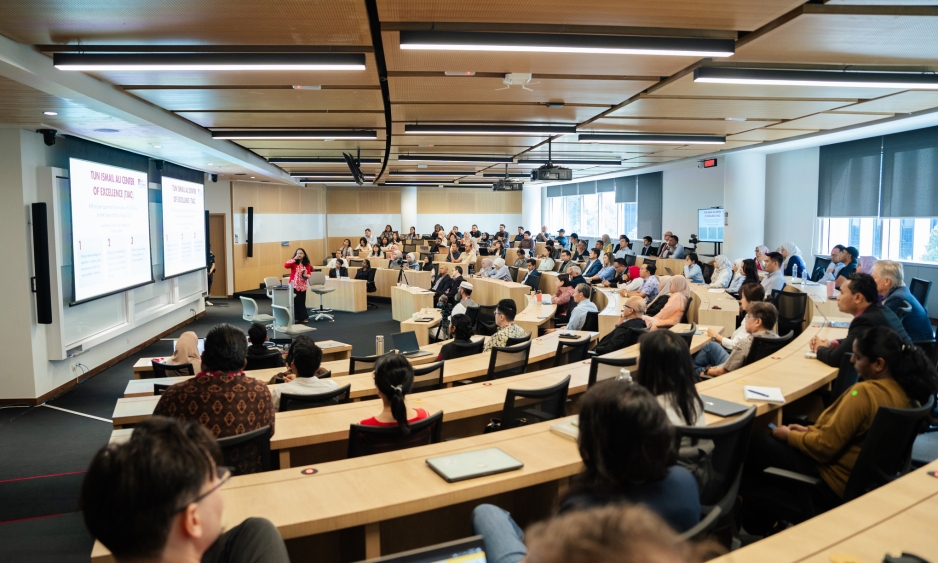
The ASB Research Seminar Series (RSS) is a monthly series hosted by ASB that invites academics and professors from various universities worldwide to give talks and share insights about their research and ongoing work. They engage in discussions on various research topics with ASB’s esteemed researchers and faculty members, receiving feedback and comments on their work.

ASB RSS are now in hybrid mode and are usually held at lunchtime.

If you would like to present at and/or attend the ASB RSS please contact the Research Office: research@asb-edu.my

Upcoming Talks
Stay tuned for more upcoming talks.
Date/Time
Speaker
Title & Abstract
by Malaysia Bangkit

KUALA LUMPUR: Malaysia perlu mengekalkan kestabilan, ketangkasan dan keyakinan bagi terus menarik pelaburan berkualiti, kata Penasihat Kanan Politik kepada Perdana Menteri, Tengku Datuk Seri Zafrul Abdul Aziz.

Beliau berkata demikian ketika berkongsi pandangan di ‘Asia School of Business sempena CKGSB ASEAN–RCEP Leadership Program’ , mengenai strategi menarik pelaburan dan meningkatkan keupayaan industri negara.

“Dalam dunia yang semakin tidak menentu, pelabur mencari satu perkara: kepastian. Malaysia perlu kekal stabil, tangkas dan diyakini,” katanya dalam hantaran di Facebook pada Jumaat.

Tengku Zafrul menegaskan bahawa pelaburan bukan sekadar angka dalam laporan, tetapi lebih penting apabila ia diterjemahkan kepada pekerjaan berkualiti, pembangunan bakat tempatan, rantaian bekalan yang lebih kukuh dan peluang ekonomi yang benar-benar dirasai rakyat.

“Dengan dasar yang jelas, pelaksanaan yang konsisten dan fokus kepada nilai tambah.

“Insya-Allah Malaysia mampu terus menarik pelaburan berkualiti yang memperkukuh ekonomi negara untuk jangka panjang,” tambahnya.

Beliau juga merakamkan penghargaan kepada pihak penganjur dan peserta atas perbincangan yang dianggapnya sangat bermakna.

Originally published by Malaysia Bangkit.

Malaysia perlu kekal stabil tarik pelaburan berkualiti – Tengku Zafrul

by Business Times

KUALA LUMPUR: LBS Bina Group Bhd group executive chairman Tan Sri Dr Lim Hock San recently shared insights on the company’s evolution from humble beginnings to becoming a respected leader in Malaysia’s property development sector.

Lim delivered a talk titled “The Journey of Entrepreneurship and Family Legacy of LBS Bina Group” at the Asia School of Business in Kuala Lumpur. The session was hosted by the Institute of Management and Leadership Development of Universiti Tunku Abdul Rahman (UTAR) in collaboration with the Cheung Kong Graduate School of Business (CKGSB).

This year marks 65 years of LBS building homes and communities, guided by its ethos of “Believe, Become and Behold”.

Under Lim’s leadership, the company has achieved numerous milestones, including being awarded Gold Status for four consecutive years in Deloitte Private’s Malaysia’s Best Managed Companies Awards, highlighting its strong governance, strategic vision, and operational excellence.

During his talk, Lim emphasised the values that have guided LBS’s growth: perseverance, integrity, and long-term vision, while underscoring the importance of creating sustainable communities for future generations.

Beyond corporate achievements, Lim also highlighted his commitment to community service through leadership roles in The Federation of Malaysia Lim Associations and The Federation of Hokkien Associations of Malaysia.

He encouraged the preservation of cultural heritage, fostering stronger community bonds, and inspiring younger generations to make meaningful contributions to society.

Originally published by Business Times.
Also published in Lumi News Malaysial and Klsescreener.

LBS’ Lim Hock San Reflects on Entrepreneurial Journey and Family Legacy

by Berita Harian

PETALING JAYA: Ketabahan, integriti, dan visi jangka panjang adalah antara rahsia utama yang memacu kelangsungan LBS Bina Group Bhd (LBS) dalam mengharungi cabaran industri pembangunan hartanah di Malaysia.

Perkara ini dikongsikan oleh Pengerusi Eksekutif Kumpulan, Tan Sri Dr Lim Hock San yang menelusuri perjalanan evolusi syarikat daripada permulaan yang sangat sederhana sehinggalah ia diiktiraf sebagai antara nama yang paling dihormati hari ini.

Beliau mendedahkan perkara berkenaan ketika dijemput sebagai tokoh terkemuka industri hartanah untuk menyampaikan syarahan kepimpinan bertajuk ‘The Journey of Entrepreneurship and Family Legacy of LBS’ di Asia School of Business, Kuala Lumpur baru-baru ini.

Menurut LBS, sesi perkongsian ilmu yang bernilai itu dianjurkan oleh Institute of Management and Leadership Development Universiti Tunku Abdul Rahman (UTAR) dengan kerjasama institusi antarabangsa, Cheung Kong Graduate School of Business (CKGSB).

Sambutan ulang tahun LBS yang ke-65 pada tahun ini menjadi bukti ketahanan perniagaan mereka dalam usaha berterusan membina kediaman dan komuniti untuk rakyat Malaysia.

Pertumbuhan mampan ini dipacu oleh pegangan kukuh syarikat terhadap etosnya yang berpaksikan prinsip ‘Believe, Become and Behold’.

Menyentuh mengenai nilai-nilai teras yang membimbing pertumbuhan kumpulan, Hock San dipetik sebagai berkata: “Ketabahan, integriti dan visi jangka panjang adalah kunci utama, di samping penekanan terhadap kepentingan membangunkan komuniti yang mampan.”

Bukti akauntabiliti dan kecemerlangan operasi syarikat di bawah kepimpinan beliau dapat dilihat melalui pencapaian luar biasa kumpulan yang merangkul pelbagai anugerah peringkat tinggi.

Paling membanggakan, LBS berjaya meraih pengiktirafan Status Emas selama empat tahun berturut-turut dalam ‘Malaysia’s Best Managed Companies Awards’ oleh firma audit antarabangsa, Deloitte.

Pengesahan pihak ketiga ini dengan jelas menonjolkan kekuatan struktur tadbir urus, ketepatan visi strategik, serta tahap kecemerlangan operasi yang diamalkan oleh kumpulan.

Selain memfokuskan kepada pencapaian korporat, pengerusi eksekutif itu turut menyentuh komitmen peribadinya terhadap masyarakat yang melangkaui dunia perniagaan.

Melalui peranan kepemimpinannya dalam Persekutuan Persatuan-Persatuan Keturunan Lim Malaysia dan Persekutuan Persatuan-Persatuan Hokkien Malaysia, beliau komited dalam menggalakkan pemeliharaan warisan budaya, memperkukuh ikatan komuniti serta memberi inspirasi kepada generasi muda untuk terus menyumbang kepada masyarakat.

Originally published by Berita Harian.
Also published in Berita Harian (Print), Lumi News Malaysia and Harian Metro.

Ketabahan, Integriti, Visi Jangka Panjang Rahsia LBS Bertahan 65 Tahun

by Astro AWANI

KUALA LUMPUR: An economist has questioned the legal basis of U.S. President Donald Trump’s new tariffs, saying Washington may be relying on a law never intended for modern trade disputes.

Asia School of Business CEO Joseph Cherian said the Section 122 of the Trade Act of 1974 was introduced in the 1970s to deal with balance of payments problems faced by the U.S..

“We don’t have that problem anymore.

“So, you have to realise that many of these laws were created for the context or circumstances that existed at the time,” he told AWANI International.

A balance of payments problem occurs when a country imports more goods and services than it exports.

Section 122 of the Trade Act of 1974 emerged from the economic turmoil of the early 1970s, when the U.S. faced serious balance of payments deficits.

At the time, the global monetary system was shifting away from fixed exchange rates, where currencies were pegged to the U.S. dollar and backed by gold.

The U.S. later introduced the provision to temporarily raise tariffs or restrict imports to reduce the amount of money flowing out of the country.

Although the U.S. still imports far more goods than it exports today, with its goods trade deficit exceeding USD1 trillion in recent years, the dollar now floats freely and is no longer tied to gold as it was during the balance of payments crisis of the 1970s.

Cherian also said the provision was designed as a temporary measure, adding that the law only allows tariffs to be imposed for up to 150 days.

He added that previous tariffs imposed by the U.S. had also failed to achieve their intended goals.

Countries such as China found alternative ways to work around the measures, including redirecting trade flows and reducing exports to the U.S., he said.

“Instead of asking whether tariffs will change things, we should recognise that tariffs are not good,” Cherian said.

The debate over Section 122 of the Trade Act of 1974 followed a major legal setback for Trump’s tariff policy after the U.S. Supreme Court ruled that many of his tariffs unlawfully relied on emergency powers.

He then introduced new global tariffs under the provision, starting at 10% and potentially rising to the 15% legal limit, which can only remain in place for 150 days without congressional approval.

Originally published by Astro AWANI.

Economist Questions Legal Basis of Trump’s New Tariffs

by BFM

Guest: Professor Shardul Phadnis (Professor of Operations and Supply Chain Management), Asia School of Business

The paralysis of the Strait of Hormuz is a geopolitical iceberg threatening global manufacturing, with ripple effects crippling supply chains now and in the longer term. Prof. Shardul Phadnis, Professor of Operations and Supply Chain Management at the Asia School of Business unpacks the implications, risks and why boards must treat supply chain resilience as a capital asset.

Learn More About:

  • The Hormuz Shockwave: How disruptions at this critical choke point severely affect non-energy manufacturing by restricting crude oil feedstocks used for plastics, coolants, and paints.
  • The Ripple Effect: Why missing a single weekly ocean port call can severely disrupt asset-heavy chemical plants that schedule their production campaigns months in advance.
  • Rapid Exposure Analysis: The critical steps mid-tier manufacturers must take to map tier-1 supplier manufacturing locations, identify shipping vulnerabilities, and navigate shifting trade policies.
  • The Death of Traditional Forecasting: Why major geopolitical disruptions violate the core assumptions of probabilistic forecasting, forcing supply chains to abandon historical data for safety stock planning.
  • AI-Powered Scenario Planning: How AI accelerates scenario creation from several months to just one or two weeks, shifting its application from long-term strategy to 6-month tactical planning.
  • Valuing Resilience as an Asset: Why treating adaptability as a capital asset, much like Toyota stockpiling a six-month supply of chips after the 2011 Tohoku earthquake, is logically necessary despite the tension it creates with short-term quarterly profits.

Listen to the full interview below.

Originally published by BFM.

Hormuz Shockwave: Expect Prices to Rise

by Malaysiakini

By Dr Shardul Phadnis, Professor of Operations and Supply Chain Management at Asia School of Business

For many, the events of Feb 28, 2026, are emotional and political.

For senior leadership in the corporate world, they are infrastructural.

Feb 28 is not about geopolitics alone. It fundamentally alters the exposure companies face. Four questions matter.

  1. What changes immediately?
  2. What changes structurally?
  3. Why does governance need to adapt?
  4. What are the urgent leadership actions?
What Changes Immediately

The fighting in Iran and the Middle East is significant. What matters equally is what follows. About 20% of the global oil and liquified natural gas (LNG) traffic, representing about 7 8% of global energy supply, passes through the Strait of Hormuz, which lies to the south and west of Iran. That traffic has effectively stopped with Iran’s retaliatory missile strikes at the Emirati US allies across the Strait.

The immediate consequences are already visible. The stoppage of crude oil and LNG shipments is driving up energy prices, raising input costs for many companies. This will have secondary effects on demand from businesses and consumers.

Blockage and rerouting at Hormuz affect transit times and compress global shipping capacity. This disrupts operational and tactical plans, which, in asset-heavy industries like chemicals or industrial goods, can extend 12-24 months with production committed several months in advance. When a chokepoint destabilizes, disruptions propagate forward through those commitments. Shipping insurance rates are likely to rise amid higher uncertainty and risk of cargo/vessel loss, propagating cost hikes forward through the supply chain.

How this all plays out for each company depends on its own supply network design and business model. Exposure analysis cannot wait.

What Changes Structurally

The more consequential shift is structural.

Iran has been a consistent US rival throughout the 21st century. President George W. Bush named it as part of the Axis of Evil (with Iraq and North Korea). Iran has continued to engage against the US ally Israel through its support of Hezbollah and Hamas; it has supplied the Russians with drones against Ukraine. The targeted killing of a sitting head of state inside his capital represents a significant escalation in sovereign norms. Whether this triggers wider conflict or not, it alters assumptions about escalation boundaries.

Even if this does not escalate into a broader war, it alters the geopolitical calculus and the perceived boundaries of sovereign escalation. This could reshape the geopolitical dynamics. To avoid a similar fate befalling them, states could rush to form new formal alliances to find safety in numbers. Could China fill an anchor role?

This could also make the US’s own allies wonder if they are completely immune to unprecedented actions that, until now, may not have been written in the rule books. With the Trump administration eyeing Greenland for months now, could the European allies really feel at ease that the US won’t pursue actions that are not in their rule book? And what may they do to create a deterrence against such an action?

Feb 28 marks a turning point in the assumptions underpinning the current global order. It is not immediate fragmentation, but the hardening of geopolitical and economic boundaries.

Senior leadership must now reassess the viability of their business and supply chain infrastructure – and adapt it accordingly.

Why Governance Needs to Adapt

The era of pursuing microscopic accuracy gains through better forecasting models and fine-tuned safety stocks is over. Now is the time to prepare for structural shifts. Companies need to build the capability to (a) systematically and rigorously ask the right and relevant “what-if” questions and (b) create and implement solutions to address them.

Today, an AI model can predict the generic impacts of this event. But it won’t articulate impacts specific to your business or your ideal strategic choices easily (unless you have trained an AI model for your business). And certainly, AI will not get an organization to move in the right direction to enact those choices. To enact, the governance structure needs to change.

The changes are needed in both long-term strategic investments in the organizational and supply chain infrastructure and its short-term operational and tactical orchestration. Building structurally adaptable infrastructure requires governance mechanisms that explicitly value flexibility. Simple payback analyses or probabilistic risk assessments are not enough. The governance mechanisms need to be geared towards clear identification of robust initiatives from contingent ones, based on rigorous assessment of underlying uncertainty.

Short-term operational and tactical planning also needs such flexibility. This typically involves creating multiple pathways to deliver value (in terms of sourcing, inventory, distribution, and routing options) ahead of time. Traditional inventory planning methods, built on probabilistic demand distributions, are not designed to handle structural disruptions. Governance models need to enable preparedness based on robust/contingent analyses of strategic choices with strong qualitative evaluations of vulnerabilities and constraints. A governance mechanism that relies solely on probabilistic analysis is likely to be inadequate.

Urgent Leadership Actions

Urgent Leadership Actions The most important leadership action for a CEO or a COO is to start building an organization that is operationally agile and infrastructurally adaptable. This requires changing mindsets and governance mechanisms. Foresight practices such as scenario planning greatly help achieve both. If this capability does not exist within your organization, it must be developed.

A disciplined scenario planning initiative is one mechanism for building that capability. Using systematic interviews, analysis, and visualization to reveal the team members’ mental models to themselves has tremendous learning benefits for the participants themselves (Research on strategic cognition of executives).

Comparing the insights from firsthand experience against those from the current decision making models can be insightful. Does scenario use reveal new developments or present known ones in a new light? Does it change your executives’ judgment about important long-term decisions? Do they see the benefits of flexibility more clearly? (Research insights from quasi-field experiments)

Go through the scenario process to see what strategic choices it recommends. Then see how your governance mechanisms handle the recommendations. Do they enable flexible investments?

In Closing

My team has been working on a scenario planning project with a large multinational company’s global supply chain team for the past 18 months. With a budget of over $1b, this team handles the company’s logistics, customs and regulations, shipper management, etc., for global transport. This organization’s visionary leader wants to bring scenario planning to the operational and tactical planning levels. The scenarios we delivered were differentiated along geopolitical fragmentation as the key defining axis, with an explicit mention of the Strait of Hormuz.

Our scenario process helped us see the criticality of this chokepoint for the company’s operations last summer. Its operations team is now exploring operational resilience strategies by considering that set of scenarios. The question is not whether such a capability is necessary, but how long you can afford to delay building it.

Dr Shardul Phadnis is a Professor of Operations and Supply Chain Management at the Asia School of Business. The views expressed are his own and do not represent the official positions of Asia School of Business or any affiliated institutions.

Originally published by Malaysiakini.

Why Feb 28 Changes The Exposure CEOs and COOs Must Govern

by National Audit Department

YBhg. Dato’ Seri Wan Suraya Wan Mohd Radzi, Ketua Audit Negara, telah diwakili oleh Encik Azunan Daud, Timbalan Ketua Audit Negara (Syarikat Kerajaan) selaku Ketua Pegawai Digital ke “AI-Powered Leadership Conference” yang berlangsung pada 2 Disember 2025 di Kampus Asia School of Business (ASB), Kuala Lumpur.

Persidangan berimpak tinggi anjuran ASB–Iclif Executive Education Center ini menghimpunkan tokoh perintis kecerdasan buatan (AI) antarabangsa, pemimpin korporat serta penggerak perubahan serantau bagi membincangkan landskap kepimpinan masa hadapan dalam era digital yang semakin kompleks dan berteknologi.

Majlis perasmian Persidangan telah disempurnakan oleh YB Gobind Singh Deo, Menteri Digital Malaysia.

Turut hadir Dr. Alifah Aida binti Lope Abd Rahman, Pengarah Bahagian Audit ICT, Jabatan Audit Negara.

Originally published by National Audit Department.

AI-Powered Leadership Conference

by Lim Wei Han

International financial centres (IFCs) serve as beacons for countries on the global finance stage. An IFC is like the nucleus of a nation’s financial activities, helping to connect financial zones in the country to international trade.

Growing and emerging markets have become more attractive to large global financial institutions as they provide a perfect combination of good talent, connected infrastructure, and world-class living at relatively affordable costs.

As global cities seek to ride this momentum and bolster their reputations as IFCs to attract capital, strategic insights to stand out in an increasingly competitive space become pertinent.

Metrics like the Z/Yen’s Global Financial Centres Index provide industry-trusted rankings of IFCs. But they are built on vast amounts of data and black box models that are less immediately actionable for financial centres.

IFCs should instead draw on competitive strategy theory and seek to identify and occupy what a US academic once described as “a lonely place on the frontier”.

By identifying multiple aspects that a host city or country excels in, an IFC can identify its comparative advantage, especially when combined to form a more unique proposition, and then building upon them to establish a core strategic position.

This can help the IFC to differentiate itself from competitors. Investors can then make more informed decisions about where to focus their activities based on specific value propositions and which IFC best fits their own mandates.

Case study

Malaysia illustrates how an IFC can identify comparative advantages and then exploit them.

In February 2024, the Tun Razak Exchange (TRX) in Kuala Lumpur, the Malaysian capital, was designated as the Southeast Asian country’s IFC.

Malaysia’s advantage comes from balancing conventional and Islamic practices while staying relatively neutral geopolitically and maintaining strong ties to key global regions. This can be seen from its history.

During the 1998 Asian financial crisis, Malaysia charted its own path instead of accepting aid from the International Monetary Fund. The government imposed selective capital and currency controls on outflows and established dedicated institutions to restructure distressed banks and corporations.

The unconventional approach drew scepticism from international financial institutions, which later came to see it as a pragmatic and effective policy response. It has since been widely cited as an instructive example of how developing economies can preserve financial stability, regain monetary policy autonomy, and accelerate economic recovery during periods of severe external and financial stress.

More broadly, Malaysia’s decisive response during the crisis helped cement its reputation for institutional pragmatism and financial innovation within the conventional financial system.

Malaysia has also led the way in the development of modern sukuk or Islamic bonds. Shell Malaysia, a non-Islamic corporation, issued the world’s first corporate sukuk in 1990.

The country’s Islamic financial market is not only well-developed and innovative but is also capable of attracting conventional investors who are not strictly looking for shariah-compliant financial products.

Other IFCs are more prominent in conventional finance. And some Middle Eastern cities are making increasingly ambitious moves in sukuk markets. But Kuala Lumpur is uniquely positioned to promote itself as a financial hub at the nexus of Islamic and conventional finance and attract a broader investor base seeking enhanced credit, liquidity and product diversification.

Indeed, Malaysia’s conventional and sukuk bond market is widely regarded as one of the most developed and active in Asia, estimated at US$557 billion as of November 2025.

Academic theory suggests that diversification across financial instruments with differing risk/return, structural, legal, and investor-base characteristics can provide a hedge against market volatility and systemic shocks.

Consistent with this view, during the 2008 global financial crisis, Malaysian conventional bonds experienced the widespread flight to quality effect with widening yield and repo spreads. But sukuk demonstrated relative resilience, with both yield and repo spreads reversing in its favour, reflecting differences in investor composition, risk-sharing structures and market dynamics.[1]

Malaysia’s competitive advantage is further bolstered by its ties to the rest of the world. Geopolitically, the country has remained relatively neutral, maintaining strong ties to the US, Europe, China and the rest of the Asia Pacific region, as well as the Middle East. This means it can connect multiple disparate regions and attract international capital flows, tapping into the demand for diversification.

One strategy to achieve this is to expand sukuk issuance in major global currencies such as the US dollar and the Chinese renminbi. This would reduce transaction frictions for international investors in dollar-denominated markets while positioning Malaysia to capture growing demand from renminbi-based investors and capital pools.

Kuala Lumpur can also pursue unique financial innovations that other IFCs cannot potentially offer, such as sustainable finance.

Unlike most other major Islamic hubs, Malaysia has abundant nature-based capital, including extensive rainforests, peatlands, mangrove ecosystems, and rich biodiversity assets.

Islamic finance principles have a strong conceptual alignment with environmental, social and governance, and climate finance objectives, particularly through an emphasis on asset-backing, risk-sharing, stewardship, and socially responsible investment.

This means Kuala Lumpur is uniquely positioned to develop and scale Islamic nature-based financial instruments anchored in natural capital. These may include sukuk and other shariah-compliant structures linked to conservation finance, carbon markets, biodiversity preservation, and sustainable land use.

This strategic positioning will further reinforce Kuala Lumpur’s role as a leading hub of financial innovation at the intersection of Islamic finance and sustainable finance.

Hub-and-spoke model

A country may have several financial zones with their own specialisations, functions and priorities. A financial centre differs from a financial zone in that it underpins and enables the other zones in their activities and specialisations. So IFCs and their respective zones can be treated as financial hub-and-spoke systems.

A successful financial hub must possess deep and liquid markets, supported by a well-established ecosystem of financial institutions, regulatory authorities, and complementary professional services. International investors must be able to transact efficiently within a transparent and predictable regulatory environment, complemented by strong legal infrastructure and seamless connectivity through world-class transportation and logistics networks.

These factors will allow the hub to integrate effectively with global capital markets and attract sustained international participation.

Kuala Lumpur benefits from having deep capital markets and multiple regulatory bodies such as Bank Negara Malaysia and Securities Commission Malaysia. It is also well-connected globally through international flights.

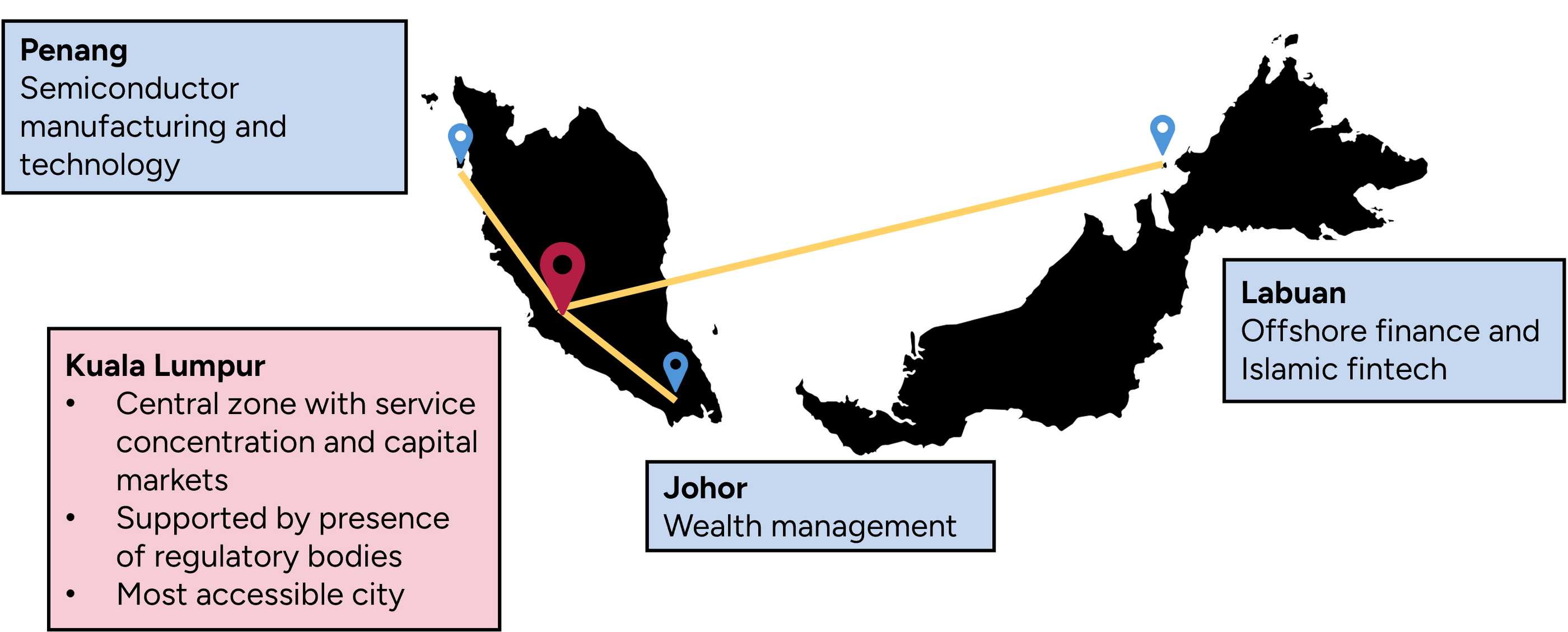
Kuala Lumpur serves as a strong hub that can be supported by other zones across the country ( Figure 1) that can act as the spokes.

Labuan, an offshore financial centre in East Malaysia that also specialises in Islamic financial technology, can lend its expertise in asset tokenisation to Kuala Lumpur while benefitting from trade through investors in the IFC.

The southern state of Johor provides wealth management and family office services, which can be further differentiated by leaning into the overall Islamic finance IFC strategy from Kuala Lumpur.

Meanwhile, the northern Penang state’s reputation in semiconductors, manufacturing and technology allows for firms in that zone and beyond that are expanding their operations to tap into Kuala Lumpur’s deeper financial market.

Figure 1. The hub-and-spoke model applied to Kuala Lumpur as a hub (red) and Labuan, Johor, and Penang and spokes (blue).

Talent strategies

An IFC’s competitive strategy should be supported by strong talent policies, including talent mobility. Relying on external talent may seem contradictory to a country’s national agenda, but it will increase the size of the talent pool so that employers can make hiring decisions that best suit their needs.

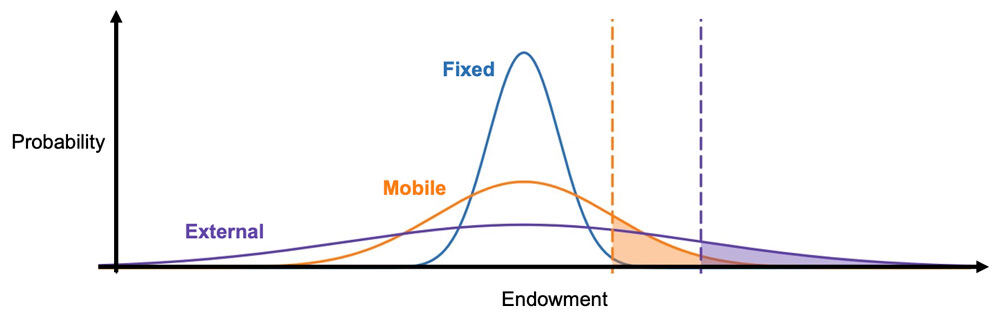
A simple financial economic model can be used to illustrate this point. We can extract talent mobility by considering the endowment distributions of fixed, mobile and external talent. Even if we assume that all three groups share the same mean endowment, each group has a different variance.

By virtue of increasing diversity and exposure, the fixed talent pool has the narrowest distribution, while the mobile and external talent pools have wider distributions, meaning that the latter pools have increased odds of finding better-performing outliers.

Employers in this model seek to make optimal hiring decisions and maximise productivity from endowment. Therefore, they hire mobile and external talent only if the talent has sufficiently high endowment such that their productivity outweighs the costs of relocating them for a new job.

Allowing employers to tap into talent pools with wider endowment distributions allows them to reach talent whose productivities outweigh their associated friction costs (Figure 2).

Figure 2. Illustrative distributions of the fixed (blue), mobile (orange), and external (purple) talent pools. Broken lines and shaded regions indicate mobile and external talent for which employers are willing to justify friction costs.
Different IFCs may adopt different strategies to facilitate talent mobility for both returning and international talent. For example, they can leverage their mandates to reduce costs for employers seeking the most appropriate talent for their needs, making it easier for employees to pursue work opportunities that are in a country’s national interest.

IFCs can also partner with the companies they host to accumulate data on hiring needs and make decisions and design policies accordingly.

The workforce at an IFC can also benefit from upskilling initiatives. As the financial and artificial intelligence sectors shift and evolve rapidly, continuous education becomes even more vital for professionals to react quickly and strategically to new trends.

To facilitate this process, an IFC can form strategic partnerships with leading academic institutions to connect companies to tailored education opportunities that can keep their talent competitive, upskilled and productive.

TRX partners Asia School of Business

In Malaysia’s case, the TRX emphasises service excellence as a core component of its talent attraction and mobility strategy. As part of this efforts, it has established a strategic partnership with the Asia School of Business to provide thought leadership, executive education, and microcredential programmes in both core and frontier areas of finance and management.

These programmes enable professionals to remain current with evolving developments in finance, leadership, supply chains and sustainability, while also strengthening capabilities in rapidly emerging technological domains such as AI and blockchain.

These initiatives enhance the broader IFC ecosystem by equipping professionals from high-value and high-growth industries with the advanced skills necessary to support innovation, competitiveness, and long-term economic growth.

Established international financial centres like London, New York, Hong Kong and Singapore have long been integral to the global financial landscape. But their comparative strengths lie primarily in conventional finance.

Emerging IFCs that are able to identify their comparative advantages and act on them will be able to effectively create and capture value, helping them to stand out globally while drawing more trade to their countries.

An IFC can extend its comparative advantage by publicising how it excels in a particular area of finance, such as through thought leadership efforts.

To be sure, not everything an IFC does needs to be completely unique. There will always be core services and transactions that investors expect from any IFC. But offering specialised, differentiated services can help investors decide whether to do business at a particular IFC.


* Lim Wei Han is an alumnus of Asia School of Business (ASB) and MIT’s School of Engineering. He is currently a research associate at Asia School of Business.

**This article draws on extensive research conducted for the TRX/Asia School of Business International Financial Centre Project and builds upon the analytical framework and findings developed in that context.

I would like to thank colleagues from Asia School of Business and MIT for their extremely helpful conversations, which shaped and strengthened this article. In particular, I am grateful to Professors Adrien Verdelhan, Asad Ata, Donald Lessard, Melati Nungsari, Pieter Stek, Renato Lima de Oliveira, Samuel Flanders, and Shardul Phadnis, whose insights helped to inform, clarify, and inspire key aspects of this research.

Originally published by Asia Asset Management.

International Financial Centres Should Seek Their Own “Lonely Place on the Frontier”

by The Edge

Malaysia’s national AI agenda is moving from aspiration to execution. The National AI Roadmap and the forthcoming AI Technology Action Plan 2026-2030 signal intent to position Malaysia as a regional AI hub by 2030. The upside is significant; AI is expected to generate US$115 billion in productive capacity for Malaysia, supported by productivity gains across multiple sectors.

But policy ambition alone will not secure this value. Al impact will be captured by ecosystems that can translate strategy into capability, talent pipelines, leadership readiness, governance discipline and adoption at scale. International Financial Centres therefore become economic enablers, not just financial intermediaries. Their relevance is now defined as much by industry formation deployment as by capital flows.

Tun Razak Exchange (TRX) is emerging in this role. TRX’s collaboration with Asia School of Business to host the AI-Powered Leadership Conference brought together global academics, industry leaders and policymakers to examine leadership readiness, workforce shifts, ethics and what intelligent economies demand from executives. The core message was clear: AI competitiveness will be determined by leadership readiness, not only technical depth. As AI shifts from pilots into core business processes, leadership capability, strategic clarity and governance discipline will determine whether AI delivers sustainable returns or introduces systemic risk.

The talent constraint makes this urgent. The World Economic Forum’s Future of Jobs Report 2025 projects 170 million new roles will be created and 92 million displaced by 2030, resulting in a net gain of 78 million jobs, intensifying competition for digital and AI-ready talent. In parallel, 94% of leaders report AI-critical skills shortages today, with around one-third reporting gaps of 40-60% in AI-critical roles, and many still anticipating material gaps by 2028.

“As the financial, supply chains and AI landscapes rapidly shift and evolve, companies will need to ensure their existing employees, senior management and boards remain abreast of new trends and possess the skills, both core and frontier, to navigate these landscapes,” said Professor Joseph Cherian, CEO, President and Dean of Asia School of Business. Through its collaboration with leading global academic institutions like Asia School of Business, TRX connects companies with executive education, degreed and microcredential learning opportunities designed to meet the needs of modern professionals, keeping them competitive, upkilled and productive.

Against this backdrop, Monash University Malaysia’s new Kuala Lumpur campus at TRX reinforces TRX’s role as a talent and capability anchor within Malaysia’s International Financial Centre. While Monash expands AI and data science, education and research, TRX provides the surrounding ecosystem of enterprises and institutions where this talent can transition into enterprise deployment and economic impact. 

But talent alone is not sufficient. As AI moves into core business operations, value will be determined by how effectively leaders deploy, govern and scale these capabilities. For C-suite leaders, AI leadership does not mean writing algorithms. It means understanding how AI works, where its limits sit, and how it reshapes decision-making, risk and accountability.

“TRX’s strategic value lies in institutionalising AI readiness by bringing regulators, academia, enterprises and talent institutions into one connected ecosystem,” said Dato’ Sr Azmar Talib. “Anchored by Monash’s RM2.8 billion TRX campus opening in 2032 and reinforced by ASB’s AI leadership platforms, TRX is building a robust AI talent pipeline for finance and technology. By anchoring executive learning, governance forums and leadership pipelines within an International Financial Centre environment, TRX is not just a financial address, it is where AI leadership capability, regulatory confidence and enterprise deployment converge.”

Originally published by The Edge.

Tun Razak Exchange: Building AI Leadership for Malaysia’s 2030 Intelligent Economy

by The Edge

Kuala Lumpur strengthened its global standing in 2025, driven by regulatory reforms, investor-friendly policies, and resilient macroeconomic fundamentals. Malaysia saw a resurgence in foreign direct investment, while the city climbed from 51st to 45th in the Global Financial Centres Index, signalling renewed investor confidence and competitiveness.

At the heart of this momentum is Tun Razak Exchange (TRX), Malaysia’s International Financial Centre. TRX leverages Malaysia’s #1 ranking under the “Prices” factor in the IMD World Competitiveness Ranking 2025, reflecting a structurally efficient and stable cost environment. This operating efficiency and predictability underpin Kuala Lumpur’s appeal as a long-term business and financial destination, enabling global firms to allocate capital with confidence. Purpose-built to anchor high-value economic activity, TRX offers IFC-grade infrastructure and a high service-level ecosystem, positioning Kuala Lumpur as a competitive player in the region.

Spanning 70 acres with a gross development value of RM40 billion, TRX hosts over 120 international and local firms, employing more than 20,000 professionals, a number set to grow as new developments come online. Guided by five core pillars-World-class City, Infrastructure, Talent, Catalytic Environment, and Hub of Convergence-the district integrates urban design, transport connectivity, talent pipelines, and policy facilitation, creating a robust foundation for Kuala Lumpur’s regional financial ambitions.

TRX’s landmark assets, including The Exchange 106, Menara Prudential, Menara IQ, Menara Affin, and the 10-acre City Park, collectively drive strong occupancy and tenant diversity. The district has reached 80% occupancy by net lettable area, with Exchange 106 housing 90% international firms, while the district overall has attracted over RM8 billion in private investment. Strategic developments such as Monash University Malaysia’s Global City Campus and PwC Malaysia’s headquarters further reinforce TRX’s role as a talent and knowledge hub, supporting both innovation and workforce development.

Connectivity and ecosystem collaboration underpin TRX’s success. As a key interchange for MRT Putrajaya and Kajang lines, the district serves 50,000 weekday passengers and links seamlessly to highways and pedestrian networks. Partnerships with Bank Negara, Labuan IBFC, Securities Commission, MIDA, and Asia School of Business enhance the city’s influence across ASEAN, while policy dialogues, academic institutions, and international delegations strengthen its global connectivity.

ESG principles are embedded at the core of TRX’s development, aligned with UN Sustainable Development Goals and international green finance standards. Achievements include LEED and GBI certifications, rooftop solar generating 190 MWh annually, low-carbon mobility, smart energy systems, and WELL Certification focusing on occupant health and well-being. TRX’s people-centric approach ensures sustainability extends beyond buildings to create a healthy, productive, and resilient urban environment.

Looking ahead, TRX is shaping a comprehensive financial ecosystem anchored on talent, business growth, innovation, and ESG. By 2035, the district is projected to attract RM12 billion in additional private investment, cementing Kuala Lumpur’s position as a leading financial and business hub in Asia while setting a benchmark for sustainable and forward-looking urban development.

Originally published by The Edge.

How TRX Shapes Kuala Lumpur’s International Financial Centre Position