We use cookies to improve your experience on our site and to show you personalized content. By continuing to use this site, you agree to our use of cookies.
More information on our Cookie Policy and Privacy Policy.
Established in 2015 in collaboration with MIT Sloan Management, our vision is to be a global knowledge hub, with regional insights from Asia and the emerging world.
ASB’s research centers conduct impactful research in emerging markets, business strategies, technology, and sustainability. Together, they foster innovation in the business landscape.
The ASB curriculum seamlessly integrates MIT Sloan’s rigor with the strategic insights of Asia. With MIT Sloan Immersion and Industry Treks, it immerses future leaders in a diverse range of industries.
Introducing ACE (Agile Continuous Education), a structured micro-credentials initiative offering flexible, hybrid courses developed to strengthen professional capability in a rapidly evolving landscape.
Imbalance and Reallocation of Funds Under Chinese Quantity-based Monetary Policy
Dan Luo studied the reallocation of funds through wholesale funding markets and its effects on credit supply. The negotiable certificate of deposit (NCD) market plays a primary role in the reallocation of funds following monetary policy interventions. State banks are conservative in their lending, which prevents full reallocation of funds when they lend on the NCD market, but not when they borrow. Following a shift in state banks’ positions on the NCD market from lending to borrowing, nonstate banks’ lending relative to state banks’ lending increased, and firms borrowed more loans from nonstate banks.
Illusion of Control
Jon Danielsson discussed the illusion of control in finance, which focuses on how common risk management and investment frameworks miss out on the most important risks and what can and can’t be done about it. He will especially focus on risk modelling and technological challenges like artificial intelligence and stablecoins.
Can Energy Subsidies Help Slay Inflation?
TIACOE hosted a session with Dr. Jesper Lindé, Advisor in the Monetary and Capital Markets Department at the International Monetary Fund (IMF), examining the effectiveness of energy subsidies in managing inflation. The talk explored how consumer energy subsidies—commonly used to protect households and businesses during price spikes—can sometimes backfire by increasing production costs and prolonging inflation. While subsidies may lower headline inflation in certain cases, they can weaken exchange rates and drive core inflation. The session highlighted that targeted cash transfers are generally a more efficient way to support vulnerable households while maintaining macroeconomic stability.
Rapid Productivity Growth in Asia: Internal and External Financing
In this seminar, Professor Renée Fry-McKibbin examined how developing Asia can transition to high-income status, highlighting the need for sustained productivity growth and strong private investment. The study shows that while growth drives regional spillovers through trade and capital flows, these effects are ultimately beneficial in the long term. It also underscores how climate change could hinder productivity, investment, and economic growth globally.
Integrating Balance Sheet Policy into Monetary Policy Conditions
This paper introduces a new Monetary Policy Condition Index (MCI) that combines conventional and unconventional monetary policy tools into a single measure, incorporating both short-term interest rates and central bank balance sheet size. Using a Bayesian Vector Autoregression (BVAR) framework, the study examines its relationship with output, inflation, and financial conditions. The results show that large-scale balance sheet policies have had a significant accommodative impact on monetary conditions, even away from the effective lower bound. The MCI also provides new insights into the effectiveness and side effects of unconventional monetary policy.
War in Ukraine and Global Inflationary Pressure: How Fiscal and Monetary Policy Should Cooperate in the Face of a Temporary Supply-Side Shock
This paper discusses the optimal policy response to a temporary rise in energy prices, a situation like that caused by the war in Ukraine. The objective is to use a tax cut to avoid the emergence of a wage price spiral, in the presence of the kind of real-wage resistance which has been shown to be empirically important, and yet also to avoid large increases in interest rates. We use a fully articulated macroeconomic model to show how to prevent such a policy strategy from creating excess demand in the short run, thereby counteracting the anti inflationary effects of the tax cut, and so prevent Ponzi-game-like fiscal outcomes in the longer term. The purpose of this exercise is to see what benefit can be obtained by making the consumption tax variable.
Fiscal Inflation in Japan: The Role of Unfunded Fiscal Shocks
This presentation investigates the extent to which fiscal factors have contributed to inflation in Japan over the past four decades. Despite sustained fiscal expansion and rising debt since the 1990s, inflation remained low until recent years. Using the medium-scale DSGE model developed by Bianchi et al. (2023), we estimate the model with Japanese data and find that, in contrast to the U.S. case, unfunded fiscal shocks are not the main drivers of inflation in Japan. Instead, real demand and supply shocks, along with accommodative monetary policy, have played more significant roles in shaping inflation dynamics.
Macro‑Financial Implications of AI – A Central Banking Perspective
In this seminar, Dr. Maximilian Freier explored the macro-financial implications of the AI revolution from a public policy perspective. The session highlighted both the opportunities of AI—such as innovation and productivity gains—and key risks, including market concentration, financial volatility, labour disruptions, and rising inequality. It emphasised that long-term outcomes will depend on how quickly AI is adopted and the effectiveness of policy and regulatory responses.
Digital Transmission of Financial Knowledge: Evidence from Stock Market Investment
This paper examines the impact of a digital platform’s transmission of financial knowledge on users’ stock market participation and investment performance. Leveraging a Chinese platform’s randomly distributed prompts as an instrument to address endogeneity, we demonstrate that access to financial information significantly increases stock investment, enhances portfolio diversification, and improves risk-adjusted returns. Although potential investors’ initial responses to the prompts are very modest, sustained exposure overcomes inertia and leads to considerable engagement. Overall, digitalization has the potential to democratize finance by providing scalable, low-cost financial education that helps individuals make more informed investment decisions.
Determinants of the International Use of Currencies: Implications for Emerging &
Developing Economy Currencies
This presentation examines the evolving roles of major currencies — including the U.S. dollar, euro, yen, pound, and Chinese renminbi — in global payments, reserves, and exchange rate anchoring. It highlights the economic and financial factors that shape international currency use, and offers fresh insights into the prospects for emerging market currencies to expand their global influence.
Launch of the Tun Ismail Ali Center of Excellence
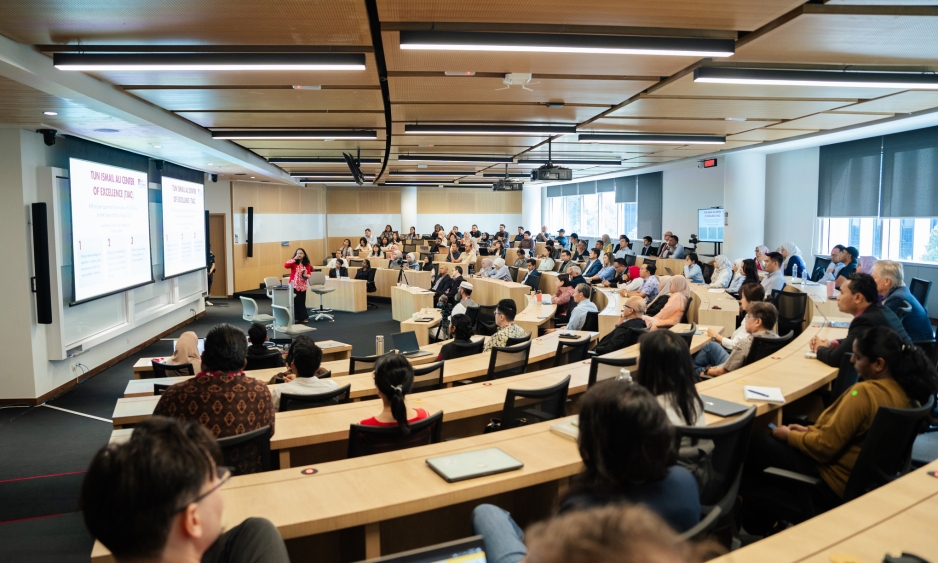
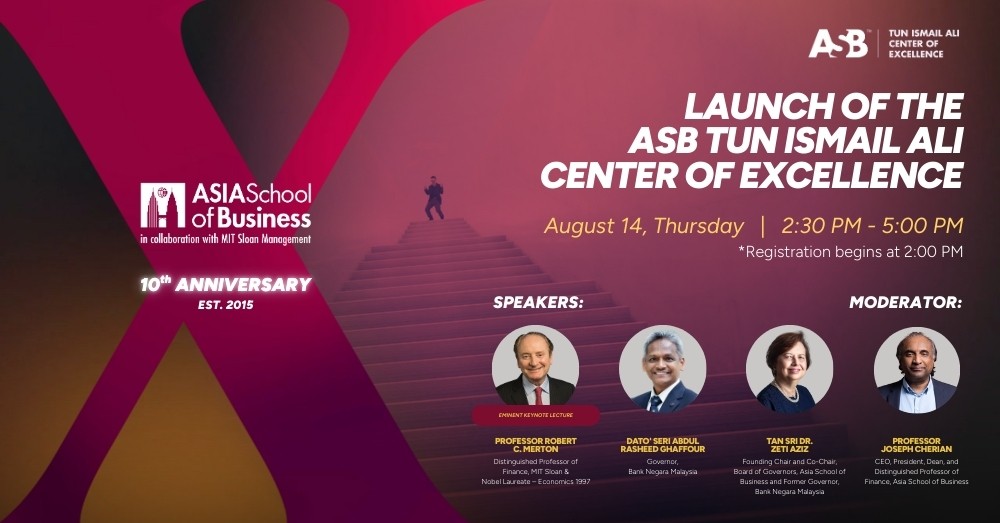
In celebration of ASB’s 10-Year Anniversary, we officially launched the Tun Ismail Ali Center of Excellence (TIACOE)! We were honored to welcome Nobel Laureate in Economics (1997), Professor Robert C. Merton, as our eminent keynote speaker, who spoke on “Financial Design Innovation to Improve Policy Implementation: Auto-Open-Market-Operations Bond and Retirement Security Bond.” This special occasion commemorated the legacy of Tun Ismail Ali, the first Malaysian Governor of Bank Negara Malaysia, and marked the beginning of a new chapter in advancing academic-practitioner collaboration in monetary and financial economics.
Exchange Rate Disconnect and the Trade Balance
The TIACOE hosted a session with Dr. Martin Bodenstein, Assistant Director in the International Finance Division at the Board of Governors of the Federal Reserve System, Washington, DC. He presented a model of exchange rate determination that incorporates costly international financial intermediation and trade rebalancing. The session explored how trade balance adjustments often overlooked in existing literature play a significant role in exchange rate dynamics, accounting for nearly 50% of fluctuations over the business cycle. Dr. Bodenstein emphasized the importance of using trade data to better identify the real drivers of exchange rate movements.
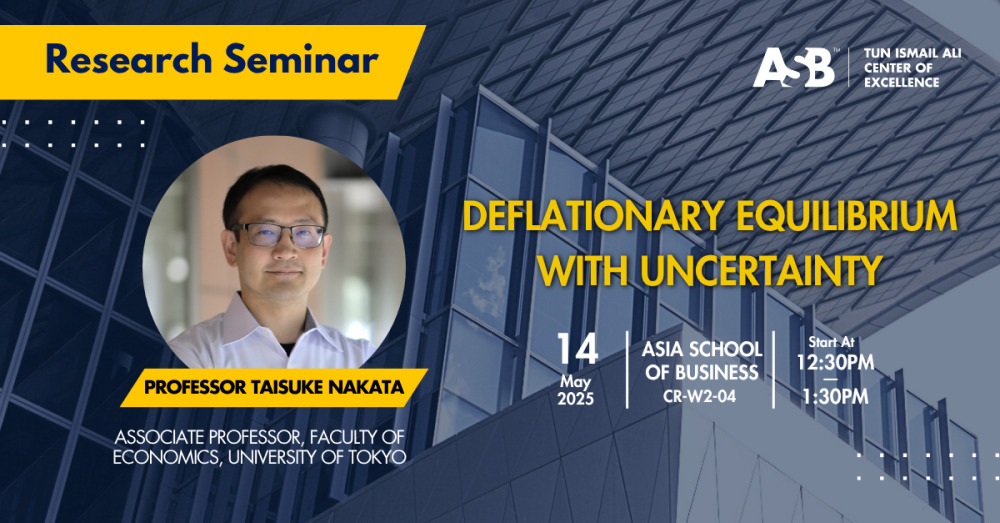
Deflationary Equilibrium with Uncertainty
The TIACOE hosted a session with Professor Taisuke Nakata, from the Graduate School of Economics and the Graduate School of Public Policy at the University of Tokyo. He presented an in-depth analysis of the deflationary equilibrium in the New Keynesian model, highlighting how inflation is higher at the risky steady state, which accounts for uncertainty, than at the deterministic steady state. The session shed light on why inflation can remain positive even when interest rates are at the lower bound.
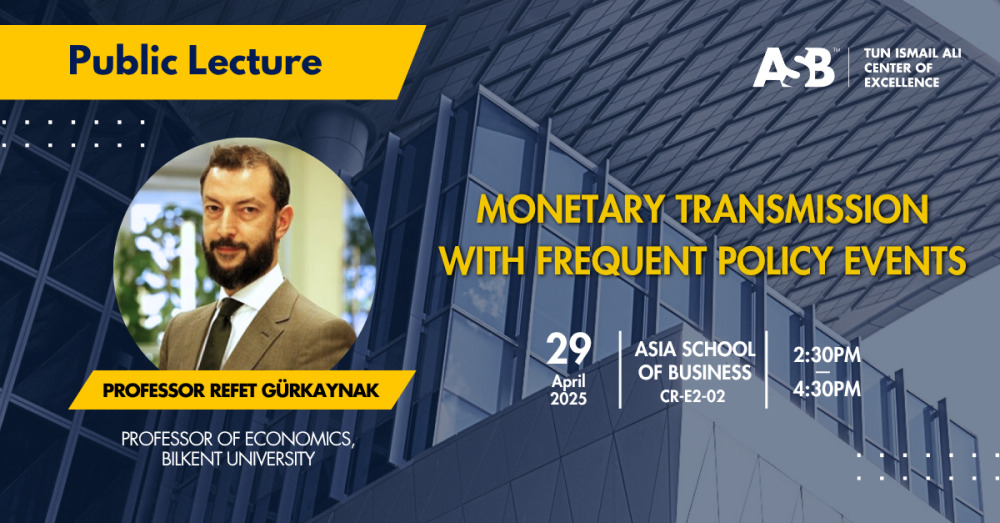
Monetary Transmission with Frequent Policy Events
Newly appointed Research fellow, Professor Refet S. Gürkaynak, examined the dynamics of monetary transmission in today’s rapidly evolving policy landscape in TIACOE’s first public lecture. Drawing on his extensive expertise in monetary economics, financial markets, and international economics, the session offered valuable insights for academics, economists and practitioners seeking to navigate shifting global macro-financial trends.
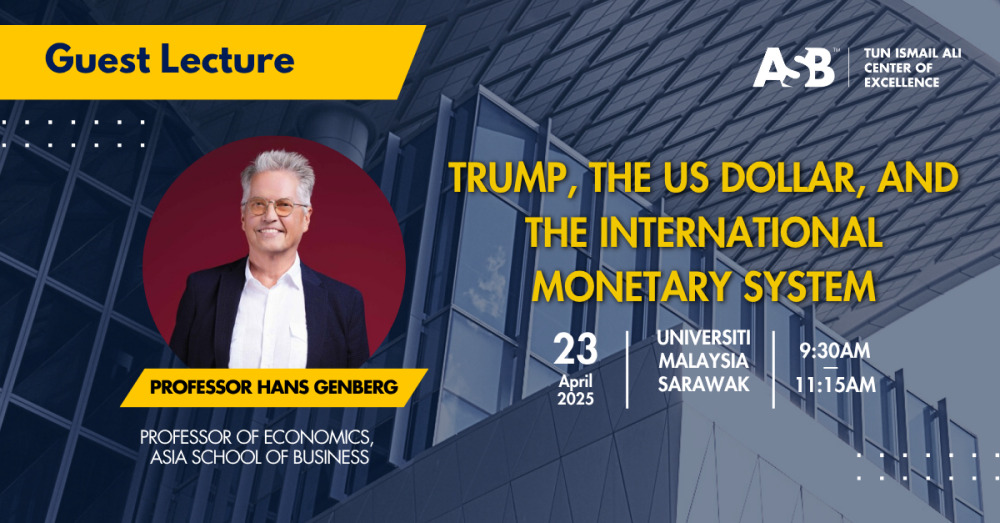
Trump, The US Dollar, and The International Monetary System
To strengthen university relations between ASB and institutes in East Malaysia, Professor Hans Genberg presented a talk titled Trump, the US Dollar, and the International Monetary System at UNIMAS, Sarawak. His seminar contextualizes recent events in the United States and the implications they may have on the global monetary system, providing key insights useful for the students, professors, and economists present at the talk.
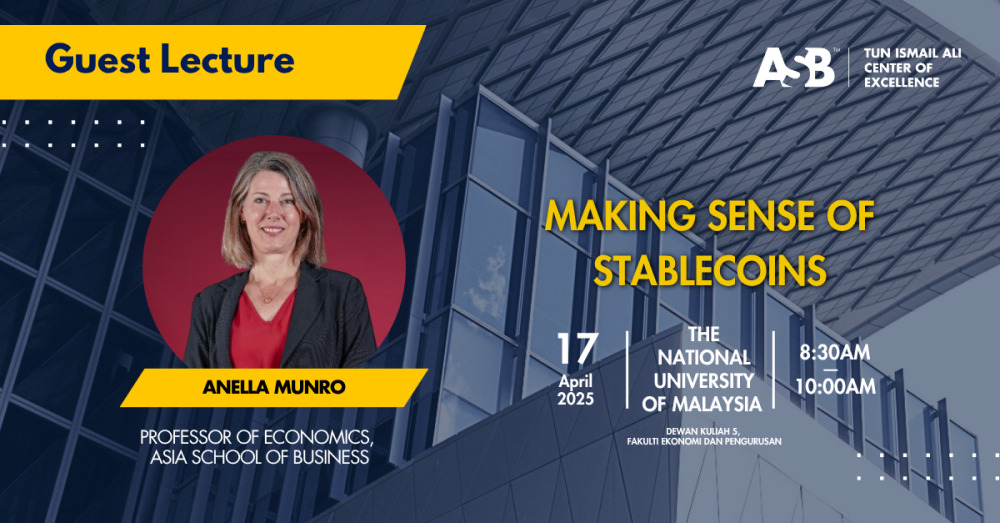
Making Sense of Stablecoins
Professor Anella Munro, Professor of Economics at ASB, conducted a seminar at Universiti Kebangsaan Malaysia titled Making Sense of Stablecoins as an effort to foster collaboration and opportunities with ASB and UKM. Her presentation examined the growing role of stablecoins in the global financial system, their implications for monetary sovereignty, and the complex regulatory challenges they pose. The seminar provided a timely perspective on one of the most consequential developments in contemporary monetary economics.
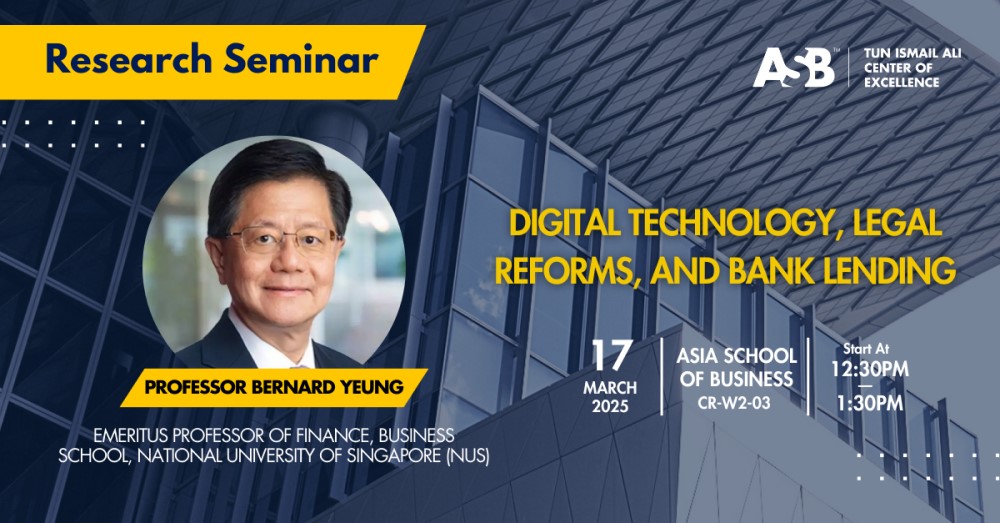
Research Seminar: Digital Technology, Legal Reforms, Bank Leading
The TIACOE hosted its first event, featuring Professor Bernard Yeung, an esteemed scholar in finance, economics, and strategy. His presentation explored the impact of digital technology and legal reforms on bank lending, highlighting how online collateral auctions have reshaped credit markets. The session provided valuable insights into the evolving financial landscape, drawing engagement from academics and industry professionals.
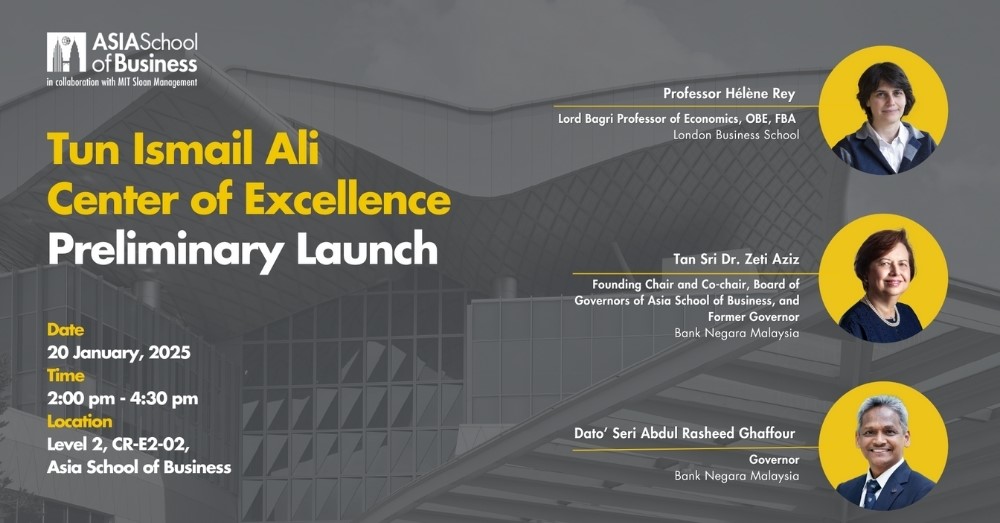
TIACOE Soft Launch
Under the stewardship of Asia School of Business, The Tun Ismail Ali Center of Excellence is a Bank Negara Malaysia-endowed research center. The launch showcases the strategic vision for this new center of excellence and feature addresses from distinguished leaders in central banking, including Tan Sri Dr. Zeti Aziz (Founding Chair and Co-chair, Board of Governors of Asia School of Business and Former Governor, Bank Negara Malaysia) and Dato’ Seri Abdul Rasheed Ghaffour (Governor of Bank Negara Malaysia). Professor Hélène Rey (London Business School and CEPR) delivered the keynote presentation on global financial cycles and their impact on emerging markets.
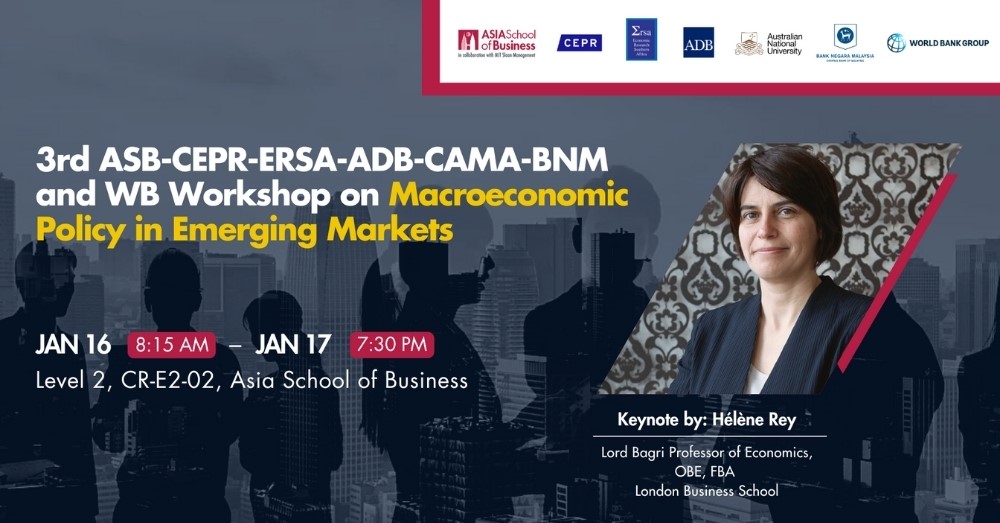
3rd ASB-CEPR-ERSA-ADB-CAMA-BNM and WB Workshop on Macroeconomic Policy in Emerging Markets
The 3rd Macroeconomic Policy in Emerging Markets Workshop focused on addressing the challenges of macroeconomic policy in emerging markets amid global uncertainties, high interest rates, and limited fiscal space. With Hélène Rey (London Business School and CEPR) as the keynote speaker, the event featured research discussions on topics such as monetary and fiscal policies, policy coordination, debt sustainability, and spillovers from advanced economies, providing insights into innovative policy options and strategies for emerging markets.
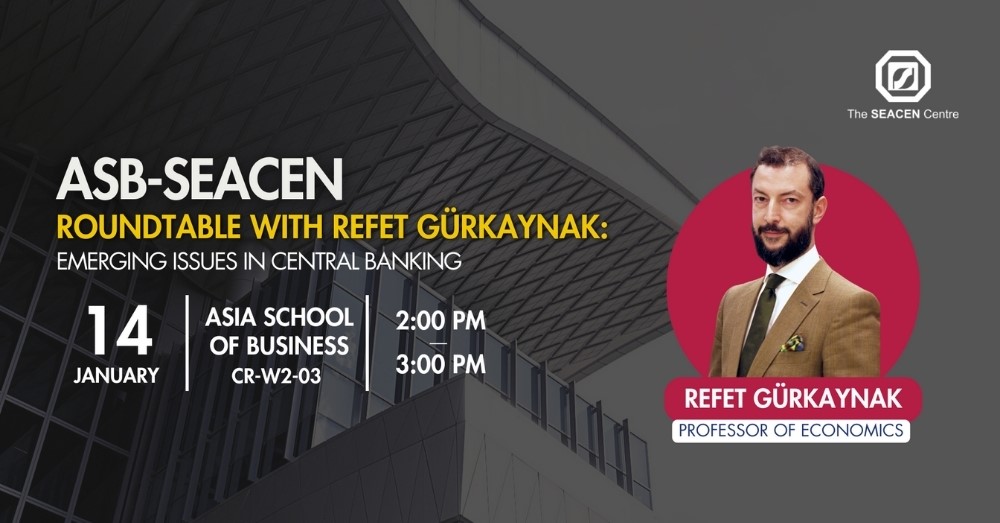
ASB-SEACEN Roundtable with Refet Gürkaynak: Emerging Issues in Central Banking
An engaging roundtable discussion on the current and emerging challenges that central banks face with Prof. Refet Gurkaynak, Professor of Economics and Acting Dean of the Faculty of Economics, Administrative and Social Sciences at Bilkent University. This session delved into pressing topics such as monetary policy in a post-pandemic world, the impact of technological innovation on financial systems, and the role of central banks in addressing climate risks, central bank independence and other related issues.
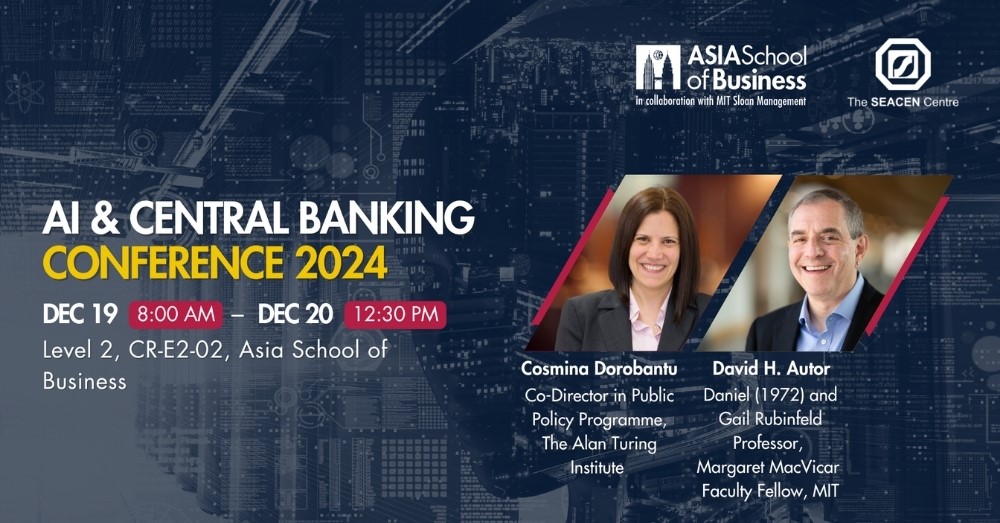
Artificial Intelligence and Central Banking Conference 2024
This two-day event examined the impact of Artificial Intelligence (AI) on economies and central banks, exploring challenges like labor market disruptions and opportunities to enhance productivity and policy-making. Hosted by the Asia School of Business and The SEACEN Centre, it featured expert presentations and workshops to help academia and central bankers navigate this evolving landscape.